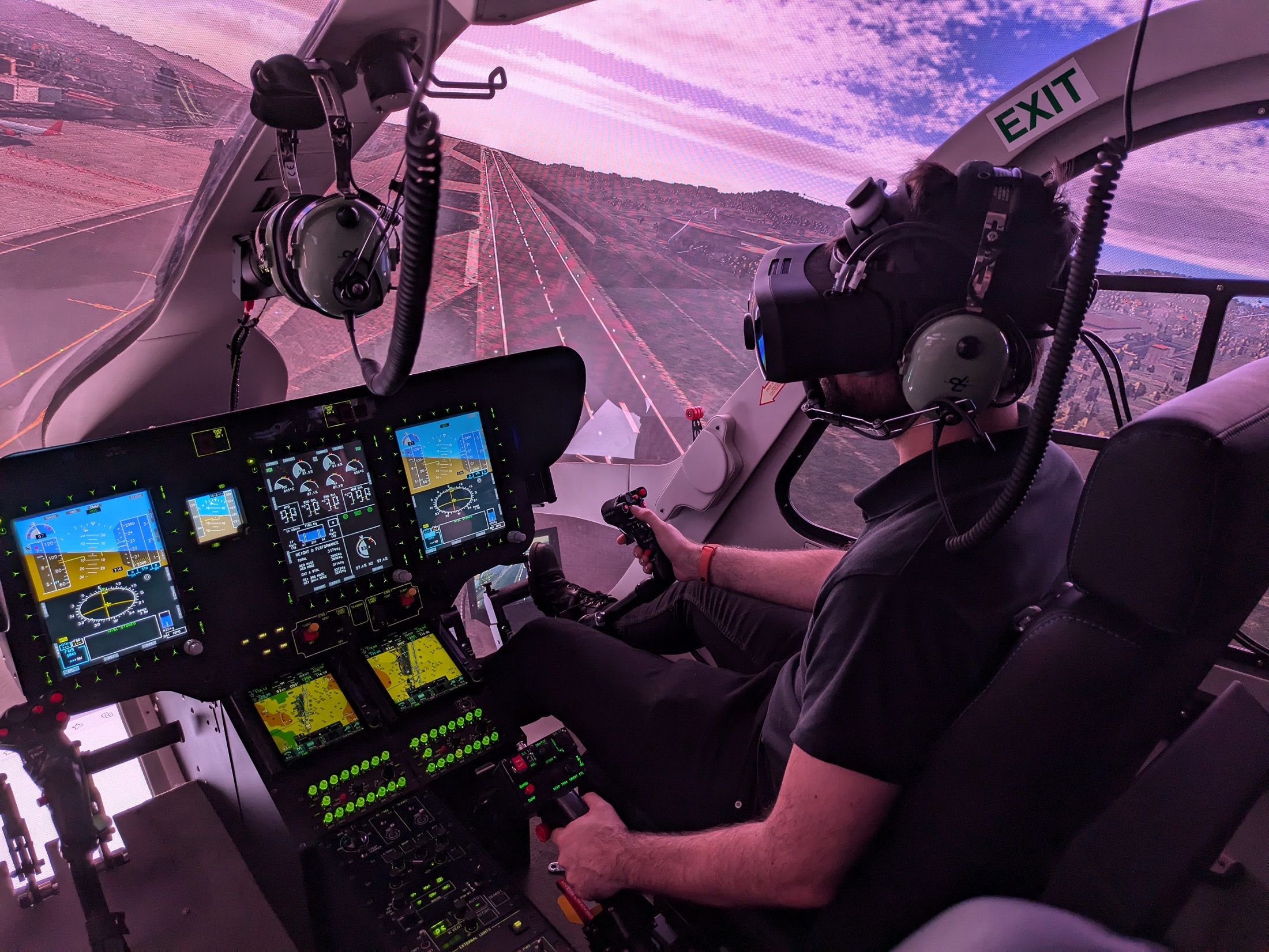
In the aviation industry, immersion is a multi-layered concept where Virtual Reality (VR) and Mixed Reality (MR) offer distinct approaches within professional training. Each technology brings specific advantages: VR provides a fully immersive digital environment that is effective for both procedural learning and mission-based training, while MR integrates physical cockpit hardware to enhance haptic feedback.
At entrol, we see the key not as choosing one over the other, but as understanding which technology best supports each specific training objective—and applying it where it truly adds value within the training process.
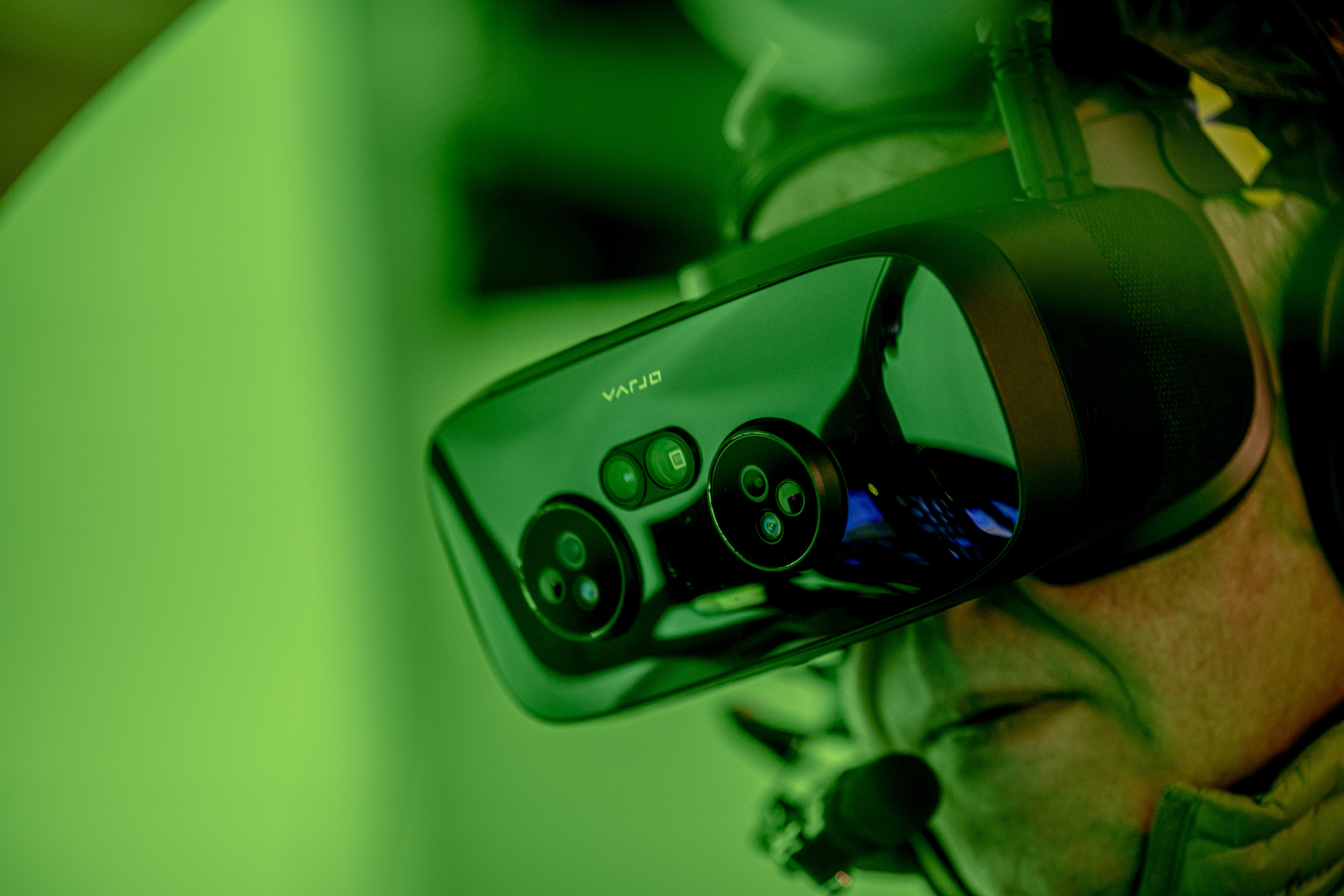
VR & MR: How to Choose the Right Technology in Professional Simulation
To deliver effective training, it’s essential to understand how each visual solution contributes to the overall training program. High-fidelity visual systems such as LED environments provide a strong foundation for immersive training, while technologies like VR and MR offer additional capabilities tailored to specific training needs. Rather than comparing them, the key is to apply each solution where it brings the most value to the pilot at a given moment:
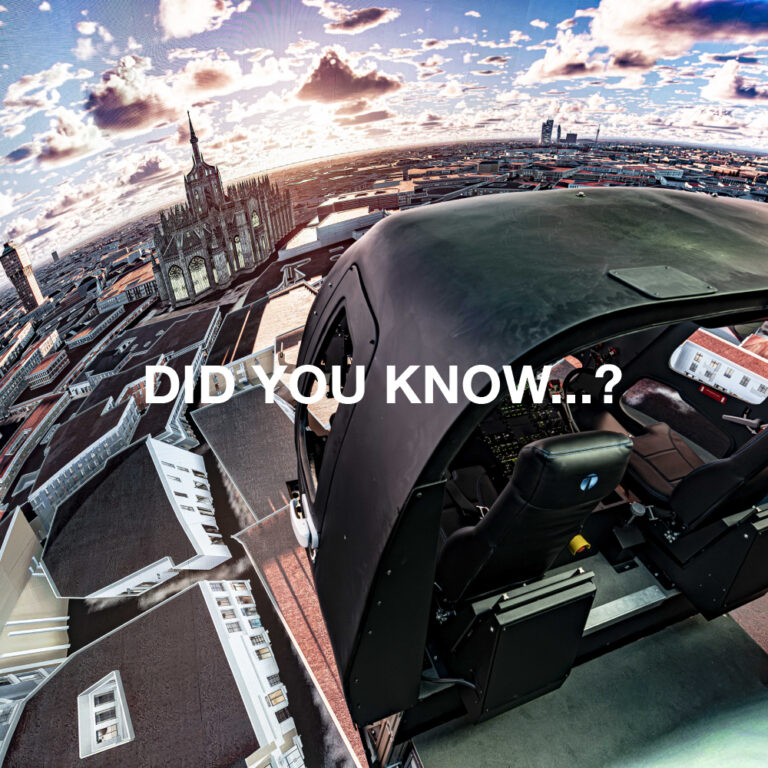
- ENWALL (LED Visual System): this system is based on state-of-the-art LED technology, providing a highly immersive and high-fidelity visual environment. It integrates both wall and floor visuals, enhancing vertical visibility and improving situational awareness. The use of LED technology ensures excellent color contrast and visual clarity, while eliminating the need for warping and blending, resulting in a seamless and distortion-free experience. This makes it especially relevant for advanced training environments where visual fidelity and realism are critical.
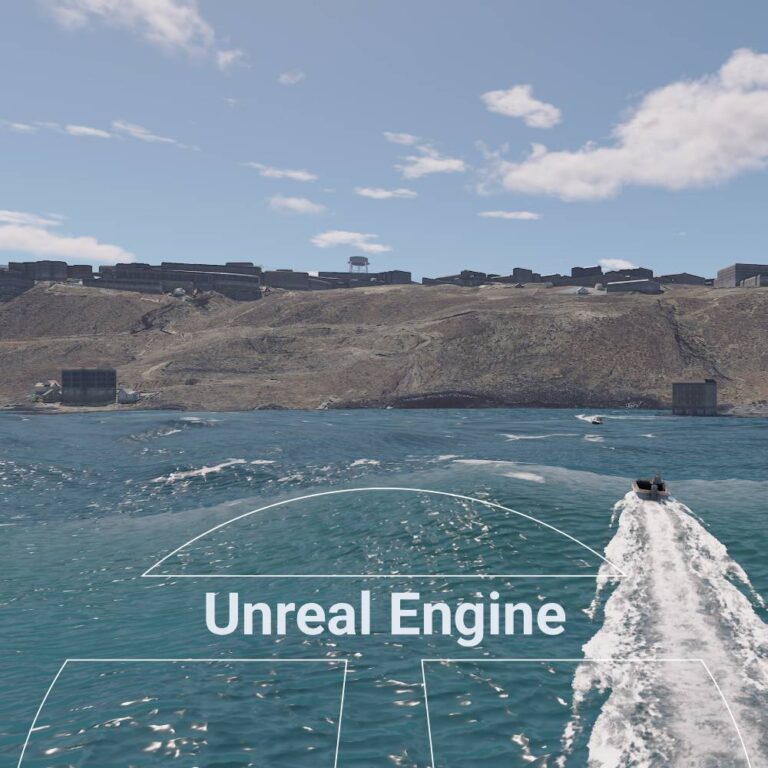
- Virtual Reality (VR): this technology provides a fully synthetic digital environment. It is an effective tool for spatial orientation and mission-based training, allowing pilots to work through operational scenarios where situational awareness is key. As a portable and flexible solution, it is well suited for mission preparation and tactical familiarization, offering a high level of visual immersion across different stages of training.
- Mixed Reality (MR): a visual solution that allows the pilot to interact with a physical cockpit while the external environment is digitally rendered. At entrol, we see MR as a strong fit for specific mission profiles such as search and rescue or tactical operations. It enables the use of real systems and controls during these missions, reinforcing procedural accuracy and realism. It is designed for environments where coordination under pressure and precise physical interaction are critical.
The importance of sensory integration in a pilot training
While Virtual Reality is a solid tool for working on the “what” and “where” of the cockpit—focused on procedures and familiarization—the transition to advanced mission training often requires broader sensory input. In immersive pilot training, the focus shifts from cognitive understanding to haptic adaptation.
In a realistic flight simulator, providing the brain with the same physical cues it will encounter in the actual aircraft—such as the mechanical resistance of a switch or the specific friction of a collective—helps anchor the visual experience. This integration of tactile feedback enhances realism and supports a more effective transfer of skills to real-world operations, particularly in high-demand scenarios.
The role of tactile feedback in training
At entrol, mission design is based on the principle of sensory synergy. In professional simulation, spatial accuracy is the baseline: every control is mapped 1:1, ensuring that the pilot’s spatial awareness remains consistent whether operating in a digital environment or a physical cockpit.
Integrating Mixed Reality (MR) builds on this foundation by enabling physical interaction with real controls while maintaining a fully immersive virtual environment. This creates a training setup where tactile feedback and visual immersion work together in a coherent and natural way.
This combination enhances realism and supports the effective transfer of skills from simulation to real-world operations.
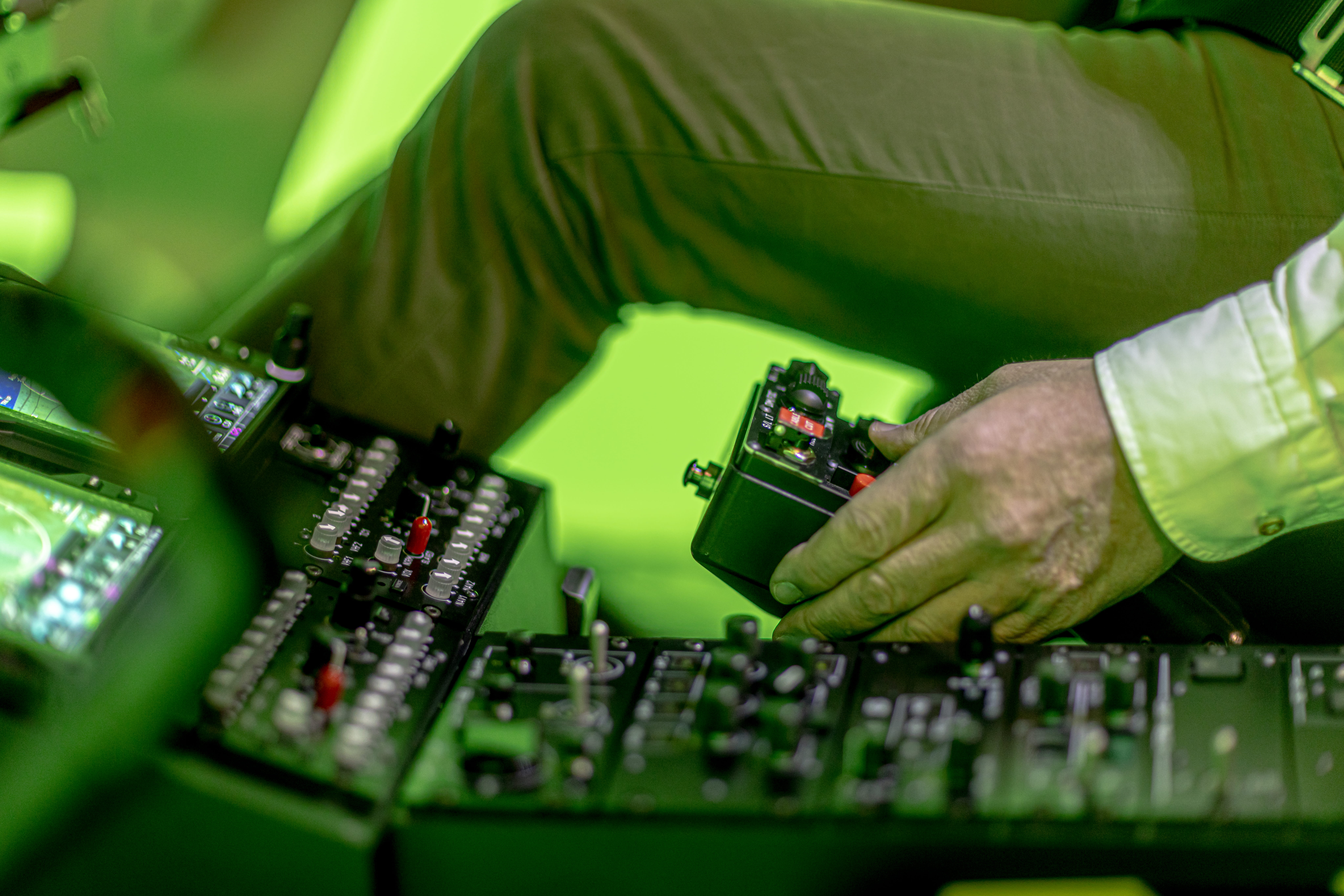
The “Muscle Memory” factor – the physical cockpit
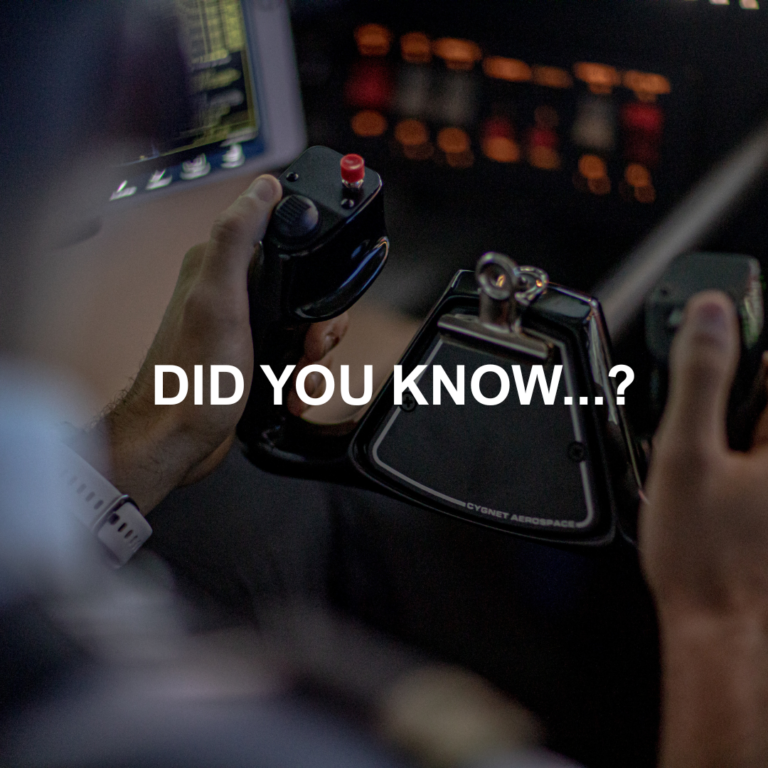
In our MR simulators, the cockpit is real. When you reach for the collective, you feel friction. When you flip a switch, you hear the mechanical click. This physical feedback is what anchors the training. MR-based training ensures that the muscle memory developed in the simulator transfers effectively to the real cockpit.
Spatial awareness & depth perception
Advanced mission tasks such as hovering or precision landings rely heavily on accurate depth perception. Stereoscopic visual systems—used in both VR and MR—can provide 3D depth cues that, in some cases, offer advantages over traditional 2D displays.
The value of Mixed Reality at entrol lies in the ability to introduce real physical references. In an MR environment, the pilot can see the actual aircraft structure and cockpit alongside the digital environment. In missions like helicopter hoist simulation, these reference points help maintain situational awareness and support more consistent distance judgment.
The multi-crew ecosystem: simulating the full mission
The strength of entrol’s technology lies in its ability to synchronize different roles.
- In the cockpit: the pilot uses a physical FTD to maintain flight stability.
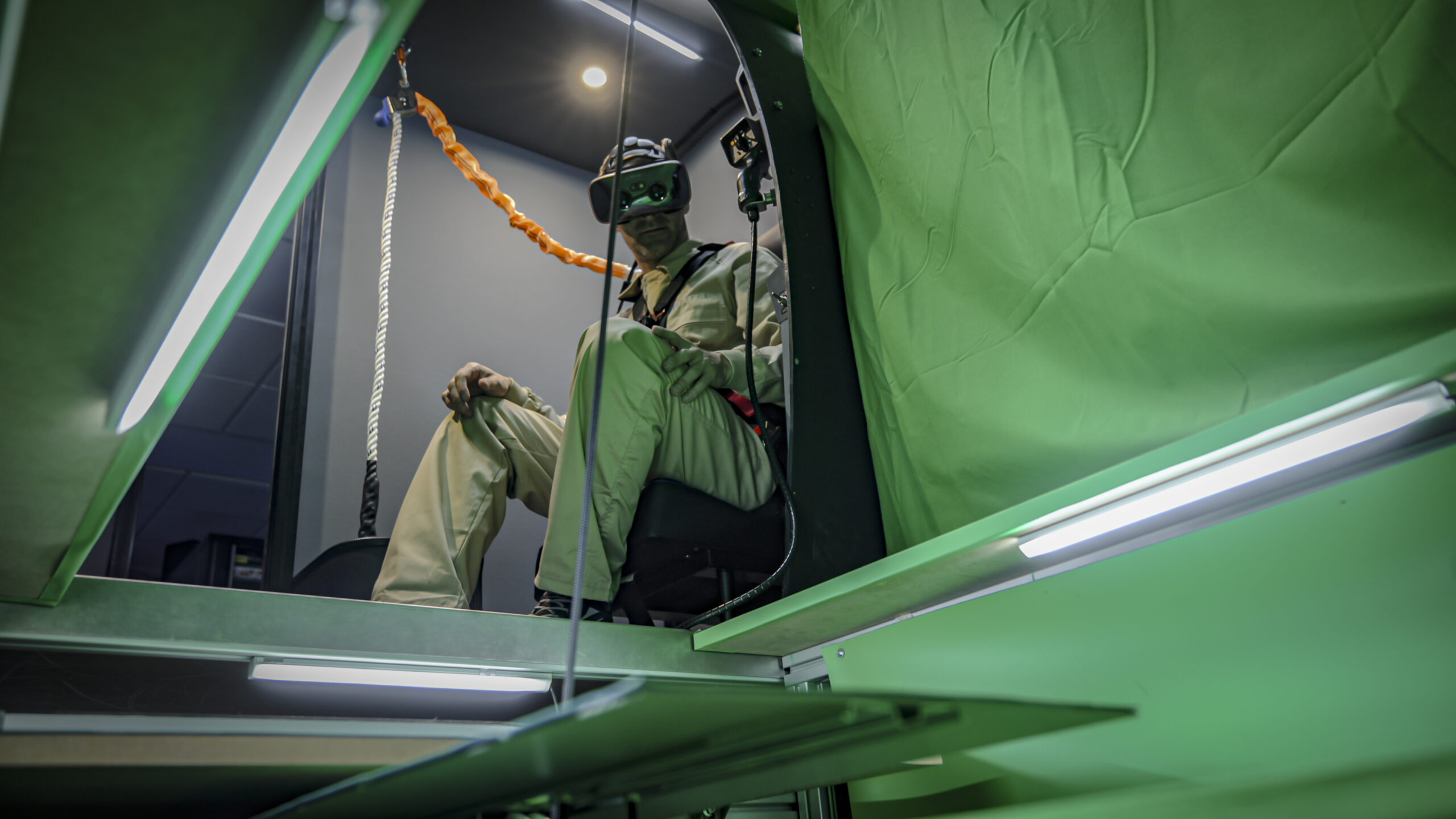
- In the cabin: the hoist operator uses MR goggles to lean out of the “virtual door,” seeing the terrain and the cable while interacting with a physical control. This creates a shared mission environment where coordination and visual references closely mirror real operational conditions.
Helicopter hoist simulation in MR
To understand the approach to mission readiness, it’s important to distinguish between the objectives of each role. While Mixed Reality (MR) is used in pilot training to provide in-flight references, the hoist station addresses a different need.
The hoist station is a dedicated environment designed to develop communication and standard procedures between the cockpit and the cabin. Its purpose is to strengthen verbal coordination and information exchange—both critical in search and rescue operations. By focusing on these skills, the goal is to ensure that the crew operates as a coordinated unit, where clarity and precision in communication are essential.
This level of realism is what defines a modern Flight Training Device (FTD). It’s not just about representing a mission—it’s about recreating the conditions in which it is carried out.
The aviation industry is evolving rapidly, but safety standards must remain constant. Mixed Reality allows tactile elements to be integrated into training, combining them with immersive visual environments when the training objective calls for it.